

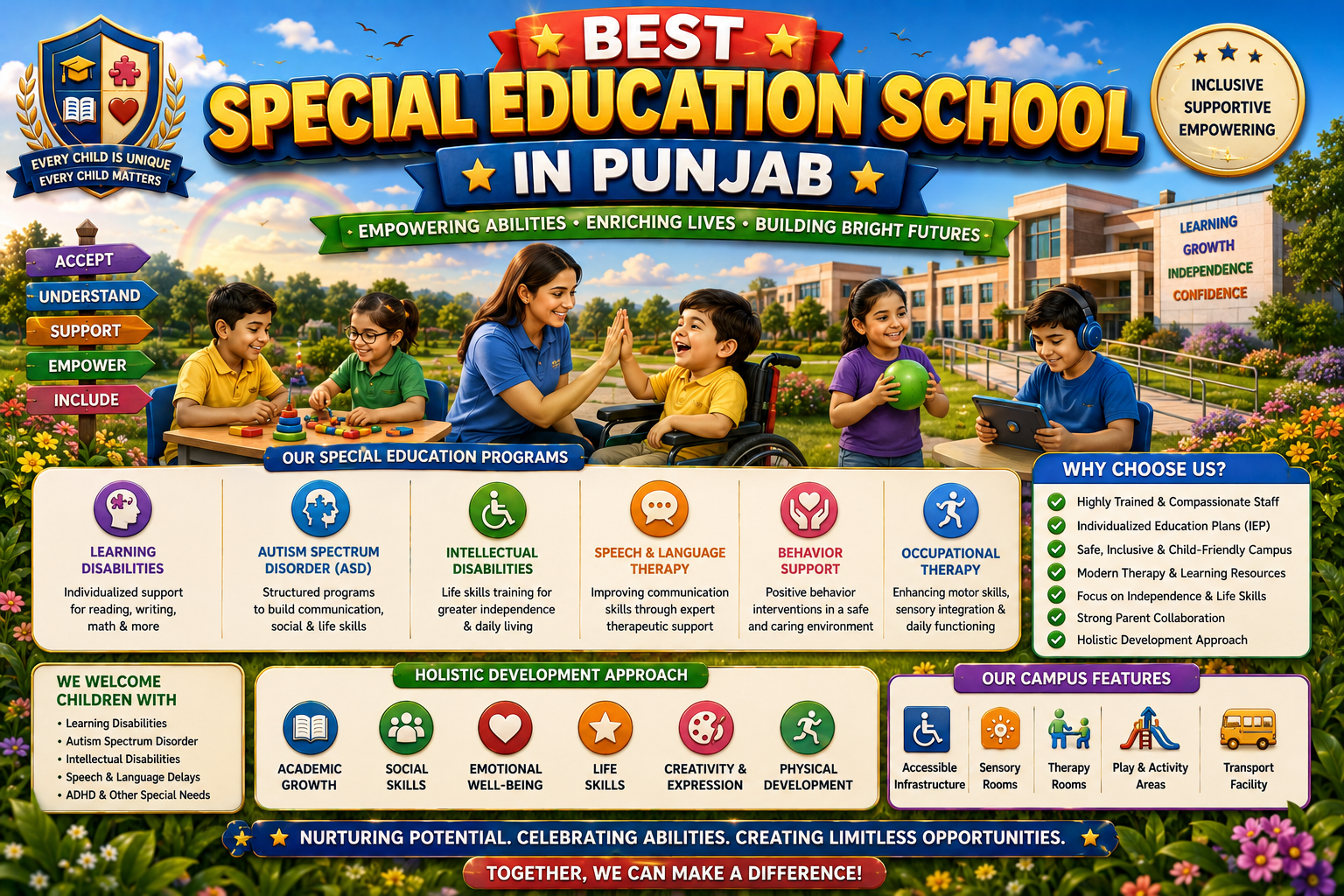
Every child should get an education that fosters self-assurance, self-reliance, creativity, and emotional health. The correct educational setting may turn obstacles into opportunities and help kids with special learning needs realize their full potential. These days, parents are looking more and more for schools that offer skill-based development, individualized attention, inclusive learning, and emotional support. Selecting the best special education school in Punjab involves more than just academics; it also involves establishing a secure and supportive environment where kids may flourish intellectually, socially, and emotionally.
Punjab has seen an increase in knowledge about specialized learning support and inclusive education. Students with varying abilities are gaining confidence and becoming engaged members of society thanks to schools that emphasize tailored teaching approaches. These educational establishments are aware that each student develops differently and necessitates customized teaching strategies. Special education institutions are enabling kids to succeed at their own speed with the help of qualified teachers, therapeutic assistance, and cutting-edge teaching methods.
The goal of modern special education is not just classroom learning but overall personality development that prepares students for independent living and future careers. Schools that focus on holistic development offer a balanced combination of academics, extracurricular activities, life skills training, and emotional support; these institutions give students the opportunity to explore their strengths while receiving the assistance they need in areas of difficulty.
Personalised Learning for Every Child
Children who receive specialized guidance often show remarkable improvement in academic performance, behavior, and self-esteem. Children who receive specialist coaching frequently exhibit notable improvements in their behavior, self-esteem, and academic success. Modern special education aims to develop students’ personalities in order to prepare them for independent living and future occupations, rather than just teaching them in the classroom.
When looking for the best special education school in Punjab, parents typically consider things like small class sizes, therapeutic support, tailored education plans, experienced instructors, and a caring environment. A balanced mix of academics, extracurricular activities, life skills instruction, and emotional support are offered by schools that prioritize holistic development. These establishments give students the chance to discover their abilities while getting the support they require in challenging areas.
Understanding each student’s particular needs is the first step towards creating a successful special education program. To determine students’ learning preferences, communication skills, and developmental requirements, teachers provide evaluations. Customized learning strategies are created based on these observations. With no pressure or fear of failing, this individualized approach enables pupils to study comfortably. Additionally, it promotes curiosity and active engagement in the classroom.
Importance of Inclusive Education and Therapy Support
A key factor in the success of special education is having qualified and caring teachers. Teachers who have received training in inclusive teaching techniques know how to modify lessons to meet the requirements of individual students. To make learning interesting and approachable, they employ interactive sessions, activity-based learning, visual aids, and sensory gadgets. Children are inspired to overcome obstacles to learning and develop confidence by their tolerance and support.
Another crucial component of high-quality special education institutions is therapeutic support services. Students can enhance their communication, motor skills, focus, and emotional equilibrium with the aid of speech therapy, occupational therapy, behavioral therapy, and counseling. These treatments are incorporated into regular educational activities, guaranteeing steady growth and advancement. Comprehensive support systems at schools improve student performance and give parents peace of mind.
Comfort, accessibility, and participatory learning are the main goals of contemporary special education classrooms. Students can concentrate and study efficiently in a supportive environment created by safe infrastructure, sensory-friendly areas, and assistive technologies. Additionally, technology is now a crucial tool for helping kids with various learning difficulties. Lessons are made more interesting and comprehensible with the use of adaptive software, digital learning platforms, and visual aids.
For kids with exceptional needs, inclusive extracurricular activities are just as vital to their development. Sports, music, art, dance, and theater all promote creativity and collaboration while enhancing mental and physical health. Engaging in these kinds of activities fosters social skills and self-expression in kids. Schools that encourage extracurricular activities provide a well-rounded education that fosters overall development.
Another crucial component of effective special education programs is parental engagement. Schools that stay in constant contact with parents build a solid network of support for their pupils. Together, educators and parents monitor development, talk about difficulties, and recognize successes. Parents can learn how to support their child’s educational path at home by attending workshops and family counseling sessions.
Building Confidence, Independence, and Future Skills
Many schools in Punjab have adopted student-centered teaching methods as a result of the increased awareness of inclusive education. These schools prioritize skill development, emotional intelligence, and independent learning over grades alone. Vocational activities, communication exercises, and life skills training assist students lead confident lives and prepare them for future chances.
For kids with special learning needs, emotional health and social acceptance are essential. Students are encouraged to be inclusive, respectful, and empathetic in a healthy school atmosphere. Children are more driven to learn and engage with others when they feel valued and appreciated. Students who attend inclusive schools are better able to form connections, communicate more effectively, and feel more secure.
Children’s lives are positively impacted for a long time by schools that integrate academic instruction with social and emotional growth. Students can strengthen their communication skills, gain self-confidence, and become engaged members of society in a supportive learning environment. Children with various learning difficulties can have full lives and achieve great achievement with the correct support.
With a stronger focus on inclusive and specialized learning environments, Punjab’s educational landscape is changing quickly. Regardless of their difficulties, special education schools strive to provide every kid with equal opportunity. These institutions are changing lives and creating better futures by emphasizing individualized instruction, emotional support, and the development of useful skills.
How Special Education Schools Help Children Reach Their Full Potential
Today’s parents are aware that every child learns differently and that success shouldn’t be determined solely by conventional academic criteria. Children are encouraged to discover their abilities, form bonds with others, and become independent in a nurturing educational setting. The correct educational support can lead to life-altering outcomes in social interaction, academic development, and communication.
Families seeking a high-quality education that prioritizes inclusivity, compassion, and personal development are driving up demand for the best special education school in Punjab. Students can overcome obstacles and find their talents at schools that place a high priority on holistic development and individualized care. In addition to teaching kids, these establishments encourage self-assurance, self-reliance, and lifelong learning.
Encouragement, empathy, and growth chances should all be part of a child’s educational experience. In order to guarantee that every student receives the direction and assistance they require, special education schools are essential. These schools enable kids to realize their full potential and create a prosperous future by establishing inclusive classrooms, offering specialized care, and encouraging holistic development.
Recommendation to read:
